Changing how shoppers find products (net-new vs. redistributed demand)
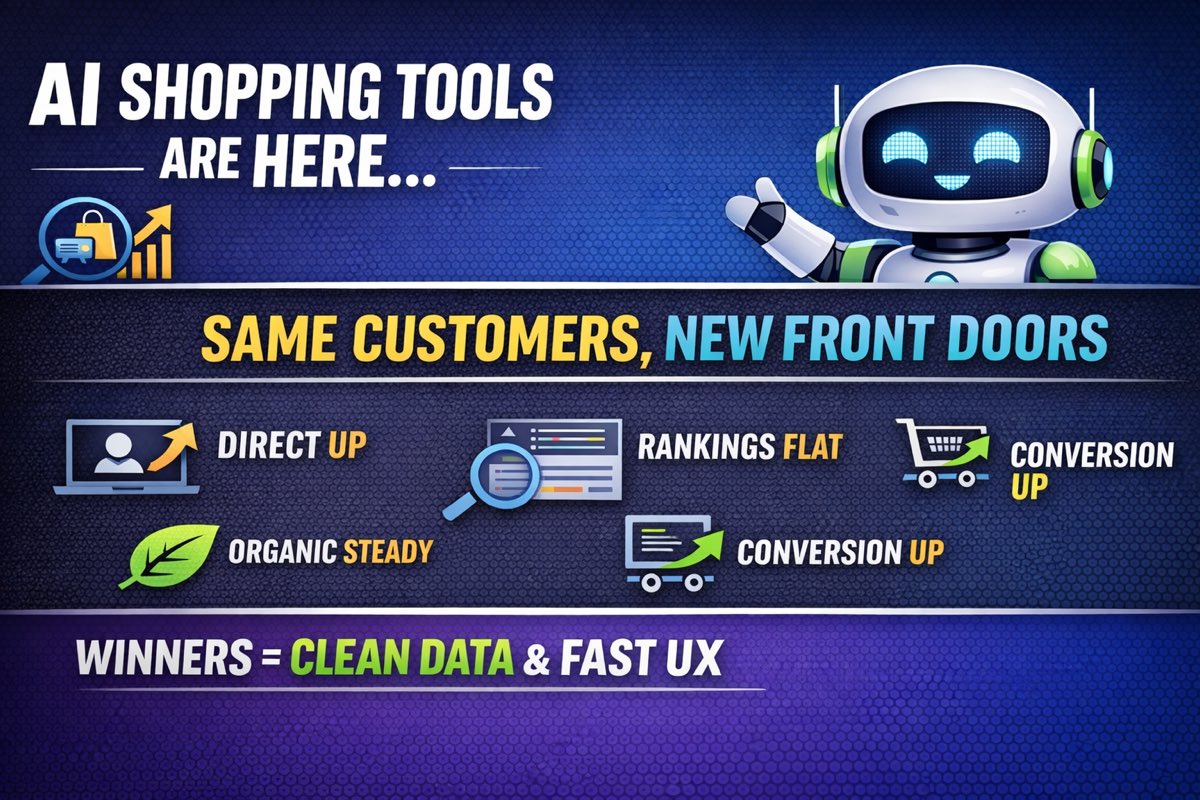
Recent data shows consumers are rapidly embracing AI-powered shopping assistants. In fact, 58% of shoppers now use generative AI (like ChatGPT or Google’s Gemini) instead of traditional search engines to get product recommendations. This doesn’t magically create new buying intent out of thin air — people still want the same types of products — but it does change where that intent is captured. In practice, AI tools are becoming the new front door for ecommerce discovery. Shoppers who might have started with a Google query or an Amazon search are now beginning their journey by asking an AI assistant for suggestions, deals, or advice. The result is that existing demand is being rerouted through new channels rather than solely through search engine result pages or marketplaces.
Crucially, this shift can translate into new customer acquisition for medium-sized brands that seize the opportunity. AI assistants are essentially advisors — they will recommend products that fit the user’s criteria, regardless of brand familiarity, as long as the data signals (price, features, reviews, etc.) are strong. Surveys indicate 40% of Gen Z shoppers would buy from an unfamiliar retailer if an AI surfaces a product with a better deal or match for their needs. In other words, a shopper who might never have heard of a niche Shopify brand could be introduced to it via an AI recommendation when searching for, say, “the best heavy-duty TV wall mount under $100.” In the past, that customer might have defaulted to a big-name brand or whichever site appeared atop Google. Now, if your product data enables the AI to identify your offering as ideal, that customer is new to you — even if their underlying intent to buy a TV mount isn’t new.
At the same time, we should be realistic: much of the traffic coming via AI is traffic that would have existed anyway, just through different paths. Consumers asking an AI for recommendations still have a need they would likely have pursued on their own. Several studies underscore this point. In late 2025, nearly half of holiday shoppers said they were likely to start gift-hunting with AI assistants before visiting any brand websites or search engines. Capital One Shopping reported that “AI-driven” web traffic to retail sites jumped 4,700% from 2024 to 2025 — explosive growth, but largely because people switched to using AI helpers for shopping tasks they used to do elsewhere. So, for an individual Shopify merchant, the incremental opportunity is capturing intent that might have bypassed them previously, rather than conjuring brand new demand.
Brands that don’t integrate their products into these emerging AI interfaces risk losing out on demand that is simply taking a different route. As one ecommerce expert put it: “AI is becoming the layer between people and what they buy online. If your product data isn’t optimized for agents to parse, they won’t recommend your products and you become invisible to a growing slice of buyers.”
Impact on conversion rates through AI assistants and interfaces
One of the most striking benefits reported from AI shopping channels is the quality and intent of the traffic they send, which can lead to higher conversion rates. Shoppers who come through AI recommendations tend to be highly qualified — they’ve described exactly what they’re looking for to the assistant, which narrows down options — and they arrive on a site with a strong intent to buy.
Real-world data backs this up: during the 2025 holiday season, traffic from AI-powered search agents (e.g. ChatGPT, Bing Copilot) converted 9× more often than traffic from social media referrals. A separate example: visitors referred by ChatGPT (via an AI plugin recommendation) converted at 5× the rate of normal organic search visitors. The team noted that when a user asks ChatGPT for “the best [product] for [their need]” and the AI suggests a specific brand, that visitor arrives “already halfway convinced.”
AI-assisted shopping interfaces can also boost on-site conversion by reducing friction and guiding the customer to the right product faster. One beauty brand saw a 41% increase in homepage engagement after implementing an AI-powered product discovery experience. Another study found that AI-based nudges drove a 9% uptick in customers proceeding to checkout.
Salesforce reported that in 2025, retailers who deployed their own AI shopping agents saw sales grow 32% faster than those without. Pandora and SharkNinja were noted as examples, with 59% higher year-over-year growth compared to peers. By late 2025, AI “agents” were credited with influencing 20% of global retail sales.
For a practical illustration, consider Everlast, the famous boxing gear brand (and a Shopify Plus merchant). Everlast undertook a major ecommerce overhaul that included migrating to Shopify and weaving in AI-driven discovery tools. They added an AI-powered search engine (SearchSpring) and a personalization platform (Nosto). The results were dramatic: within one month, Everlast’s site saw a 152% jump in conversion rate and a 23% increase in total online sales. They also attracted over 133,000 more organic visitors.
Effects on SEO and paid acquisition metrics
The rise of AI-driven shopping is also upending traditional SEO and marketing metrics. Shoppers might see a product carousel, an AI-generated answer summary, a Q&A snippet, or a visual widget before they ever see those classic blue links. They might even complete a transaction within a chat interface without ever clicking through to a website.
It’s possible (and increasingly common) for a site’s organic traffic to grow year-over-year even if its average Google rank positions remain flat. How? Because discovery now happens across multiple surfaces: not just core search listings, but also featured snippets, shopping suggestions, image results, knowledge panels, and AI-assisted answers that pull in product info. In essence, product data and structured content have become as important as classical SEO keywords.
For medium-sized Shopify brands, this means investing in “answer engine optimization” — ensuring your product catalog is AI-ready. Practical steps include adding structured data (schema markup for products, FAQs, reviews), maintaining very consistent and detailed product attributes, and providing up-to-date feeds to platforms like Google Merchant Center. Google and Shopify’s newly launched Universal Commerce Protocol (UCP) is essentially an open standard to facilitate exactly that.
Paid search ads may see fewer clicks for certain high-intent queries as users shift to conversational shopping. In response, platforms are introducing new ad opportunities — Google’s Direct Offers pilot within AI chats lets brands inject exclusive deals into AI recommendations. Marketers will need to monitor not just classic rankings and ad CTRs, but also things like how often their products are suggested by AI assistants.
It’s also worth noting that attribution is getting trickier. Traffic coming from an AI chatbot or assistant might show up in analytics as “Direct” or “Referral – unknown.” Smart brands are starting to include UTM parameters or unique offer codes in feeds so they can tell when a sale was initiated by an AI assistant.
Grounded insights for Shopify brands
It’s easy to get swept up in hype about AI, but the reality for ecommerce brand owners and tech leads is grounded and actionable: these tools won’t automatically triple your business, but they can meaningfully improve how you attract and convert customers if used wisely.
In practical terms, a medium-sized Shopify brand should approach AI shopping tools as an extension of their acquisition and conversion toolkit. Treat AI like a new marketing channel that needs SEO-like optimization (often termed “Generative AI Optimization” or “Answer Engine Optimization”). It’s not a replacement for good SEO or paid ads, but rather a layer that sits on top of them.
You still need compelling products, competitive pricing, and good reviews — AI will actually scrutinize those even more rigorously than a casual human browser might. You also need to keep an eye on how your traffic mix changes.
By late 2025, 77% of consumers who got product recommendations from a generative AI said they were likely to click through to a merchant’s site to purchase. Only 23% preferred to complete the purchase directly inside the AI platform, and even that is starting to change with new tech like UCP enabling in-chat checkout. So, today, the AI is largely a connector handing off an interested customer to your website, where you then need to close the sale.
The playing field in online retail is evolving. It’s less about who can pay for the most ads or churn out the most SEO content, and more about who can provide the right data and experience to align with AI-driven discovery.
Brands that understand this balance — avoiding unsubstantiated hype and focusing on data quality, user experience, and genuine customer needs — will likely see the best results. Done right, AI shopping tech can both redistribute demand in your favor and improve the efficiency of your sales funnel, a combination that any pragmatic ecommerce leader should welcome.
Sources
- Capital One Shopping — AI Shopping Statistics 2025
- Future Commerce — How 1,000 Consumers Use AI to Shop (2025 Survey)
- Future Commerce — AI’s Role in the Purchase Funnel
- Future Commerce — Consumer Willingness to Try Unfamiliar Brands via AI
- MarTech (Salesforce data) — AI Agents’ Impact on Holiday 2025 Sales
- LinkedIn post (D. Bardavid) — ChatGPT Referral Traffic and Conversion Lift
- Shopify Case Study — Everlast’s Conversion Boost with AI-Powered Discovery
- Anphonic.ai — AI Personalization Outcomes for Shopify Stores
- Shopify / MarTech — Launch of UCP and AI Commerce Integration
- Substack (D. Cupareanu) — Agentic Commerce and Optimizing Product Data